Spotting jellyfish in UK waters can turn an ordinary beach walk into a wildlife encounter. One day the sea looks empty; the next, translucent bells drift in the shallows or lie scattered along the tideline. Most are fascinating rather than dangerous, but identifying them before you get close matters, especially when children are exploring rock pools.
Several familiar species appear around British coasts, with sightings particularly noticeable from spring through autumn. A few have distinctive colours or markings, while others are best recognised by their shape and tentacles. Here is how to tell them apart, why jellyfish blooms happen and what to do if someone is stung.
Common jellyfish species found around the UK
Moon jellyfish: four rings inside a clear bell
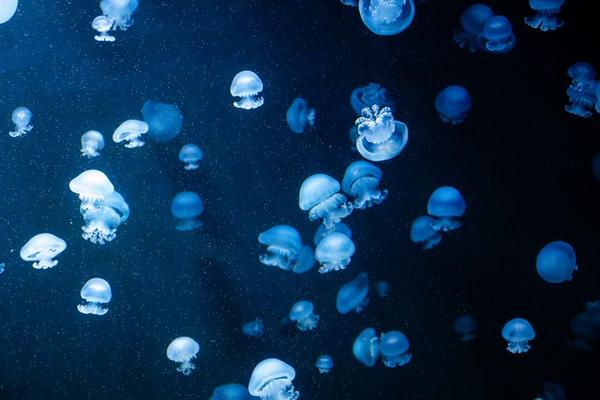
The moon jellyfish is often the easiest starting point for jellyfish identification in the UK. Look through its almost transparent, saucer-shaped bell for four pale purple or pinkish rings arranged like a flower. It can reach about 40 cm across and has short, fine tentacles around the edge. Its sting is usually mild, although touching any jellyfish is best avoided.
Barrel jellyfish: large, thick and mushroom-shaped
A barrel jellyfish can look startlingly big, sometimes reaching around a metre across. Its substantial, rounded bell may be white, cream, pinkish or bluish, often with a coloured rim. Underneath are eight chunky, frilled oral arms rather than a curtain of long trailing marginal tentacles. Despite its imposing size, its sting is generally mild.
Compass jellyfish: brown lines pointing outwards
Compass jellyfish have pale yellowish or translucent bells marked with darker brown V-shaped lines radiating from the centre, resembling compass points. They usually grow to about 30 cm across, with long, thin tentacles and frilled arms hanging below. Their sting can be painful, so keep your distance.
Lion’s mane jellyfish: a mass of fine tentacles
This species may have a yellow, orange, reddish or brownish bell and a dense tangle of hair-like tentacles underneath. Some become exceptionally large, although many are much smaller than the record-sized individuals shown in photographs. Lion’s mane jellyfish are especially associated with cooler waters. Their sting can be painful, including from specimens stranded on shore.
Blue jellyfish: blue or purple radiating lines
The blue jellyfish is generally smaller, reaching around 30 cm across. Its bell often shows vivid blue or purple radial markings and a fringe of tentacles. Interestingly, some individuals are yellow rather than blue, so colour alone is not a foolproof identification method. Its sting is usually mild but can still hurt.
Mauve stinger: small but not harmless
The mauve stinger is usually much smaller than a barrel or lion’s mane jellyfish, with a pink-purple bell, darker raised spots and slender tentacles. It occurs in UK waters, particularly when ocean conditions bring these animals towards the coast. Do not mistake its small size for safety: mauve stingers can cause painful stings.
Two jellyfish lookalikes worth recognising
A Portuguese man o’ war may wash onto western shores after suitable winds. Its blue-purple, gas-filled float resembles a tiny sailboat, but it is a colony of specialised animals, not a true jellyfish. Its long tentacles can inflict a serious sting. Keep well clear and alert a lifeguard or local beach authority.
The smaller by-the-wind sailor is another blue, sail-bearing colonial animal. Large numbers sometimes strand together. If you are curious about unusual finds, a guide to British coastal wildlife can help you compare other creatures washed ashore.
When and why do jellyfish blooms happen?
Jellyfish blooms are concentrations of many animals in one area, not necessarily evidence that a new species has arrived. Sightings often rise during warmer months, broadly from spring into autumn, but their timing varies by species, location and year.
Food availability, temperature and reproduction influence populations. Wind, tides and currents can then concentrate jellyfish in bays or push them onto beaches. A dramatic strandline after a windy night may reflect where the water carried them, not a sudden explosion in local numbers.
Before swimming, look for beach notices and ask lifeguards about recent sightings. Conditions can change quickly, and a bloom visible at one beach may be absent a short distance away.
What do jellyfish eat, and what eats them?
Many jellyfish catch zooplankton, tiny crustaceans, fish eggs or larvae with specialised stinging cells called nematocysts. Larger species may capture small fish and even other jellyfish. They are also prey for animals including leatherback turtles, and some small fish shelter beneath their bells. Jellyfish are part of a wider UK marine food web, not simply a seaside nuisance.
Which jellyfish sting, and what should you do?
Moon, barrel and blue jellyfish generally cause milder reactions, while compass, lion’s mane and mauve stinger stings can be notably painful. These are broad guides, not guarantees: severity depends on the species, contact and individual response. A detached tentacle or stranded jellyfish may still sting.
If stung, leave the water and seek help from a lifeguard or someone trained in first aid. NHS advice is to rinse the affected area with seawater, not fresh water; remove remaining tentacles carefully without touching them with bare hands; and soak the area in very warm water, as hot as can be tolerated safely, for at least 30 minutes. Avoid urine, ice and rubbing the area.
Get urgent medical help for severe or persistent pain or stings near the eyes, mouth or throat. Call 999 for breathing difficulties, chest pain, collapse, severe swelling or other serious symptoms.
A simple beach identification routine
Imagine finding a clear jellyfish on a Cornish beach in July. From a safe distance, check for four central rings. If they are present, a moon jellyfish is a reasonable possibility. If instead you see brown compass-like stripes and trailing threads, keep farther away: it may be a compass jellyfish.
Photograph the animal without touching or moving it, include something nearby for scale without placing it against the jellyfish, and note the beach and date. You can submit sightings to the Marine Conservation Society’s wildlife sightings project. A separate guide to rock pool safety is useful before exploring the strandline with children.
Frequently asked questions
Are jellyfish common in UK waters?
Yes. Several species regularly occur around the UK. Their visibility varies with the season, food supply, sea conditions and where currents carry them.
What months are jellyfish most likely to appear?
Many sightings occur from spring to autumn, often in late spring and summer. There is no single nationwide jellyfish season or reliable date when every beach will have them.
Can a dead jellyfish still sting?
Yes. Stinging cells can remain active after an animal has washed ashore, so never pick up an unidentified jellyfish or its detached tentacles.
Are all UK jellyfish dangerous?
No. Most encounters do not cause serious harm, and some common species have mild stings. Nevertheless, painful species occur in British seas, so avoiding contact is sensible.
Enjoy the sighting without the sting
Recognising four rings, compass markings, thick oral arms or a cloud of hair-like tentacles makes jellyfish identification much easier. Watch from a distance, follow lifeguard advice and record interesting sightings. These drifting animals are a remarkable part of Britain’s coastal wildlife, best appreciated without handling them.