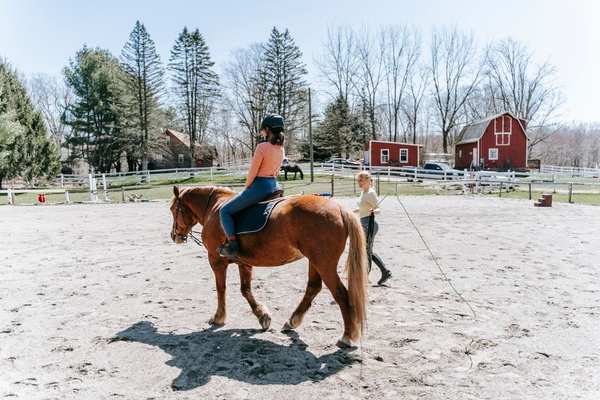
Your first riding lesson can feel like a mixture of excitement and nerves. The horse seems tall, the equipment has unfamiliar names, and everyone else appears to know where to stand. But horse riding for beginners is not about looking polished on day one. It is about learning to communicate with a horse, stay balanced, and ask questions.
This guide explains what happens at a riding school, which horse riding basics you will practise, and how to build confidence without rushing. It also applies if you rode years ago and want to return with a thoughtful approach.
Choose a school that teaches, not just takes you for a ride
Before booking beginner riding lessons, ask whether the centre provides qualified instruction, suitable beginner horses, properly fitted safety equipment, and a controlled arena. A good school asks about your riding experience and any relevant mobility or medical considerations so it can plan an appropriate lesson.
Find out whether the lesson is private or in a group. Individual instruction can help when you are nervous or returning after a break. Group lessons can be more affordable and let you learn by watching others, provided riders are at similar levels.
Ask how long the mounted portion lasts. Introductions, safety checks, and learning around the horse are also valuable parts of your session.
What to wear to your first riding lesson
You do not need expensive specialist clothing to learn horse riding. You do need equipment that protects you and does not snag on the saddle or stirrups.
Wear a correctly fitted, securely fastened equestrian helmet meeting a currently accepted safety standard. Ask whether the school supplies and fits helmets for beginners. Bicycle helmets are not suitable substitutes. If you buy your own, seek professional fitting advice.
Choose riding boots or footwear approved by the instructor, ideally with a small heel and relatively smooth sole. Trainers, sandals, and heavily treaded boots can cause problems in stirrups. Flexible trousers without bulky inside seams are usually comfortable. Tie back long hair, avoid dangling jewellery, and wear layers suitable for the weather.
It is worth learning about riding helmet fit and care before investing in your own equipment; price alone does not determine protection.
What happens when you arrive at the stables?
Arrive early enough to check in and meet your instructor. You may meet your horse in the stable or arena. Some schools prepare horses before lessons; others introduce grooming or tacking up as part of the experience.
Listen carefully to instructions about where to stand. Horses have blind spots and can move suddenly even when calm. Approach only as directed, avoid walking directly behind a horse, and ask before touching one.
Learning about horse body language helps too. Over time, you will notice signs that a horse is relaxed, distracted, or uncomfortable rather than treating it as sporting equipment.
Inside your first beginner riding lesson
Mounting and settling into the saddle
Your instructor will demonstrate mounting, often with a mounting block, then adjust your stirrups and check your position. Do not mount or change tack on your own until you have been taught how. You may spend several minutes simply feeling the horse’s movement.
Staying at a walk throughout the first lesson is completely normal. An instructor may lead the horse or use a controlled line while you practise balance. Trotting is not compulsory on day one.
Finding your balance
Picture your ears, shoulders, hips, and heels forming a gentle vertical line. Relax your shoulders, look where you are going, and let your hips follow the horse’s movement. Avoid gripping constantly with your knees or bracing hard against the stirrups.
Try this at a steady walk: pick a marker across the arena and notice whether your eyes are up, your breathing is comfortable, and your hands are quiet. Ask for one correction at a time. One adjustment you can actually feel is more useful than ten hurried instructions.
Starting, steering, and stopping
The basic riding aids involve your seat, legs, hands, and sometimes voice. You will practise asking for a walk, guiding a turn, and slowing or stopping without pulling sharply on the reins. Your instructor will explain the cues your particular lesson horse knows.
Good riding is not about forcing a response. Clear, gentle requests and releasing unnecessary pressure help a horse understand you. If something does not work, ask for help instead of getting stronger with your aids.
Safety habits that become second nature
Riding carries risk, even on an experienced school horse. Follow directions, wear your helmet every time, and tell staff if equipment feels loose or uncomfortable. Do not attempt a faster pace or unfamiliar manoeuvre without permission.
Leave a sensible distance between horses in the arena. Never wrap reins or lead ropes around your fingers, and do not give treats without asking. Speak up if you feel frightened, unwell, or unsure. Your instructor can simplify an exercise or help you dismount safely.
Horse welfare belongs in every lesson. Learn why calm handling, suitable rest, and correctly fitted equipment matter. Understanding basic horse grooming and handling also makes you more observant in the saddle.
How progress usually develops
There is no universal timetable for becoming confident. Progress depends on lesson frequency, balance, fitness, coaching, prior experience, and the horse. Someone returning after ten years may remember steering but need time to rebuild coordination.
Early goals include mounting with guidance, walking in balance, steering accurately, stopping calmly, and following arena etiquette. Later lessons may introduce rising trot, transitions, and eventually canter when your instructor considers you ready.
Consistency helps more than speed. After each lesson, note one skill that improved and one question to ask next time. Mild muscle soreness can happen, but do not push through pain; raise persistent discomfort with your instructor.
Frequently asked questions
Do I need to be fit before starting horse riding?
You do not have to be an athlete. Riding calls for balance, coordination, and muscles you may not use elsewhere. Discuss health concerns or accessibility needs with the school before booking.
Can adults learn horse riding from scratch?
Yes. Many schools offer lessons for adult beginners. Ask to join a session that matches your experience rather than a class of more advanced riders.
Will I trot in my first riding lesson?
Possibly, but not necessarily. Many beginners stay at walk throughout their first session. Building balance and control matters more than reaching a faster pace.
How many lessons until I can ride independently?
There is no fixed number. Your instructor should judge whether you have appropriate balance and control for the setting. Regular lessons and feedback matter more than an arbitrary deadline.
Start with understanding, not speed
The reward of learning to ride is discovering that small, thoughtful changes make communication easier for both horse and rider. Choose a supportive school, arrive prepared, practise the fundamentals, and let progress develop at a sensible pace. Confidence grows by doing the simple things well, lesson after lesson.