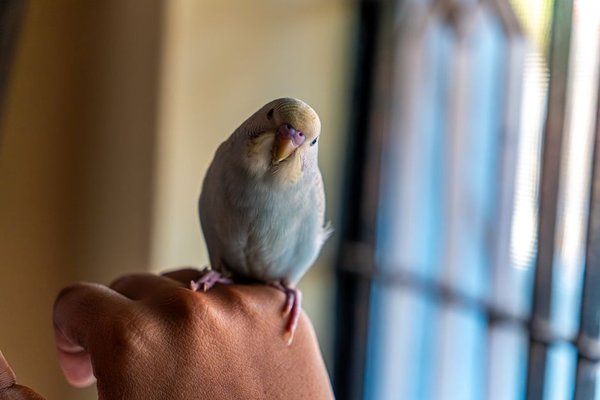
A new budgie might chirp when you speak yet dart away when your hand approaches. That doesn’t mean the bird dislikes you. For a small prey animal, an unfamiliar hand can seem threatening. Learning how to tame a budgie starts with making everyday encounters feel safe, then letting the bird choose closer contact.
The aim isn’t to make a budgie tolerate being grabbed. It’s to build enough trust for treats, stepping onto a finger and returning to the cage to feel predictable. Some birds settle quickly; others need weeks or months. Their comfort matters more than a deadline.
Make the Cage a Place Your Budgie Feels Safe
Give a newly arrived budgie time to locate food, water and favourite perches before attempting hands-on training. Position the cage where the bird can observe household activity without constant foot traffic or sudden noise. Approach from the side rather than looming overhead.
Speak softly while doing routine care. If your budgie retreats to the back of the cage, stop approaching. Predictable feeding, cleaning and rest periods make your presence familiar. A suitable cage, varied perches, foraging opportunities and adequate sleep also support calmer behaviour. These basics belong in any guide to budgie cage setup and daily care.
Read the Signs Before Moving Closer
One of the best tame budgie tips is to measure progress through behaviour, not touching. A comfortable bird may eat, preen, chirp or explore while you’re nearby. A worried one may lean away, freeze, climb frantically or fly back and forth. Stillness alone doesn’t prove trust; a frightened bird may also become motionless.
Find the distance at which your budgie continues its normal activities. Sit there and talk quietly for a few minutes. Over several sessions, move closer only when the bird remains relaxed. Understanding budgie body language helps you recognise when to advance and when to pause.
Begin Budgie Hand Training With Rewards
Become a Familiar, Positive Presence
Start with five- to ten-minute sessions once or twice daily. Sit beside the cage, read aloud or quietly go about your work. Avoid tapping the bars, staring continuously or reaching in to make the bird interact. When it seems settled, offer a small piece of a favourite treat, such as millet spray, near a familiar perch.
Keep normal food and fresh water available. Never withhold meals to encourage cooperation. If your budgie won’t take food from your fingers, attach the treat near its perch and stay nearby. Willingly eating in your presence is already progress.
Let the Bird Approach Your Hand
First, rest your hand outside the cage without moving it toward the bird. When this no longer disrupts its normal behaviour, hold a treat near the bars. Later, offer the treat just inside the open doorway, keeping your hand steady. Don’t follow a retreating budgie around the cage.
Picture a budgie named Pip who eats millet happily but backs away whenever a finger appears. Instead of chasing Pip, hold the millet at the doorway for a few seconds, then withdraw. During a later session, Pip may lean toward it. Reward that tiny choice before expecting the bird to move closer.
Repeat each stage until it feels easy for the bird. If your budgie stops taking treats or appears frightened, return to the previous comfortable step. Gentle repetition is the foundation of budgie trust training.
Teach a Voluntary Step-Up
When your budgie approaches confidently, offer a stable finger or handheld perch in front of its feet. Position a treat so leaning toward it earns a reward. Next, reward one foot touching the perch, then both feet stepping on. Say “step up” as the movement becomes familiar, rewarding the attempt immediately.
Some budgies prefer a perch before a finger. That’s perfectly fine. Don’t press into the bird’s chest, pin its feet or force it onto your hand. The aim is a voluntary action, not a successful capture. Practice stepping down onto a familiar perch with a quiet “down” cue and another reward.
Short, successful sessions build confidence more reliably than long ones. If the bird hesitates, make the task easier rather than asking more insistently.
Prepare Carefully for Out-of-Cage Time
Before letting your budgie fly around a room, close windows and doors, turn off ceiling fans, remove other pets and block dangerous gaps. Make large panes of glass and mirrors visible, and keep hot surfaces, exposed water and unsafe plants out of reach.
Provide clear landing places and let the bird choose when to leave its cage. Use a familiar handheld perch and treats to encourage a calm return. Avoid chasing the bird as a routine way to catch it. A safe budgie exercise and play routine begins with preparing the room, not opening the door first.
Respond to Biting and Setbacks Without Force
Bonding with a budgie isn’t a straight line. A noisy visitor, unfamiliar object or frightening experience may cause a confident bird to become cautious again. Return to calm, easy interactions rather than pushing through the fear.
If your budgie bites, stay calm and stop the interaction. Don’t shout, tap its beak or punish it. Ask whether you moved too quickly, cornered the bird or missed an earlier warning. Biting often means the bird needs distance, and respecting that message helps preserve trust.
Sudden withdrawal may also signal illness. A budgie that becomes unusually weak, persistently fluffed up, short of breath or unwilling to eat needs prompt advice from an avian veterinarian. Training can wait until health concerns are addressed.
Make Bonding Part of Daily Life
Outside formal sessions, talk gently, provide safe foraging activities and let your bird observe you without handling. Budgies living with another budgie can learn to trust people too, although each bird may progress at a different pace. Companionship with another bird isn’t a training failure.
Notice the little achievements: eating while you’re close, approaching the door or remaining on your finger by choice. These signs tell you more than how long you can keep a reluctant bird still.
Frequently Asked Questions
How long does it take to tame a budgie?
There is no guaranteed timetable. Some birds accept treats within days; others take weeks or months, particularly if they have been frightened before. Work at the individual bird’s pace.
Can an older budgie be tamed?
Yes. Older budgies can develop confidence through predictable routines and rewards. Give an anxious bird extra time to learn that hands no longer mean being chased or grabbed.
Should I put my hand inside the cage every day?
Only when the bird is comfortable with that stage. At first, sitting nearby or offering food from outside may be more useful. Gradually introduce a still hand near the doorway.
What if my budgie never likes being petted?
That’s okay. Many budgies enjoy conversation, treats or stepping up without wanting to be stroked. A respectful relationship doesn’t require physical affection.
Trust Grows Through Small Choices
Taming a budgie works best when each interaction offers safety, an achievable choice and a positive outcome. Stay patient, reward voluntary movement and stop before fear takes over. A bird that chooses to approach you today is building the confidence to do it again tomorrow.