Beginning horse riding as an adult can feel daunting. You may be excited to get into the saddle but unsure how lessons work, whether you are fit enough, or what everyone at the yard seems to know already. A good instructor expects beginners to ask questions. You do not need childhood experience or expensive equipment to begin.
Horse riding lessons for adults introduce the basics at a pace that suits your confidence, abilities and goals. Here is what to expect at a UK riding school, from booking your first session to recognising progress.
Can you learn to ride as an adult?
Absolutely. People start riding in their twenties, fifties and beyond. Age alone does not determine whether you can learn; your health, mobility and the suitability of the horse and lesson matter more. Tell the riding school about injuries, disabilities or health concerns before booking so it can discuss suitable arrangements. Seek individual medical advice if you are uncertain whether riding is appropriate for you.
Adults often bring useful strengths: they can follow explanations and reflect on feedback. The challenge is sometimes overthinking. Riding takes practice because your hands, legs and balance must gradually learn to work together.
What happens during your first riding lesson?
Expect to complete a safety form and discuss your experience, height, weight and any access needs. A reputable centre uses that information to assess whether it has a suitable horse and equipment. Staff may explain yard rules and how to approach a horse before mounting.
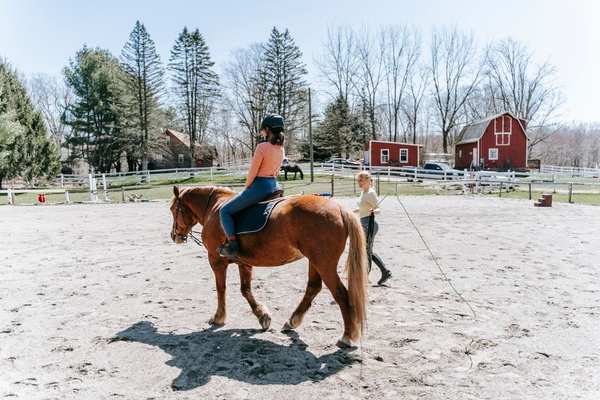
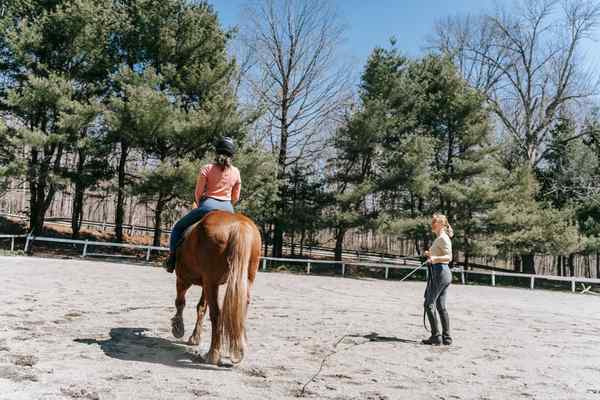
Your instructor should check your helmet, show you how to mount safely, often using a mounting block, and adjust your stirrups. Early exercises usually involve sitting in balance, holding the reins, asking the horse to walk, steering and stopping. Some sessions use a leader; others allow more independent control.
You might spend the entire first lesson at walk. Trotting should come when your instructor judges you ready, not because you feel pressured to keep up. Finishing able to ask for a calm stop is a worthwhile first achievement.
Private or group lessons?
Private adult horse riding lessons offer individual attention, particularly useful if you feel nervous or need adjustments. Group lessons may cost less per person and can be enjoyable once you can steer safely among other riders. Ask whether the centre offers dedicated adult-beginner groups rather than assuming any group is suitable.
What should you wear for your first lesson?
Start with safety, not shopping. British Equestrian recommends checking whether the riding centre can lend a suitable helmet and boots. Wear comfortable, close-fitting trousers without bulky inner seams and layers for changeable British weather. Remove dangling jewellery, avoid loose scarves and tie long hair back so your hat fits.
A secured, correctly fitted riding helmet meeting the centre’s current accepted safety standards is essential. If buying your own, have it professionally fitted and avoid a second-hand hat of unknown history. Riding boots need an appropriate sole and small heel; trainers, wellies and heavily treaded footwear can create hazards if a foot becomes caught in the stirrup.
Ask the instructor to approve anything you already own. You can explore other useful equipment later in our horse riding safety essentials guide.
How to choose a suitable UK riding school
Look for a centre that regularly teaches adults from scratch, assesses riders before allocating horses and answers questions without making beginners feel foolish. The British Horse Society has a directory of approved centres, which is a helpful starting point, although you should still assess the individual school.
Ask about instructor experience, beginner supervision, group size, appropriate horses and insurance. In England, commercial businesses providing horse riding or riding instruction generally require a local-authority licence. Requirements differ elsewhere in the UK, so ask about the school’s relevant current licence rather than assuming a badge covers everything.
Horse welfare matters as much as customer service. Notice whether horses appear well cared for, staff handle them calmly and tack fits properly. A school should be happy to explain how it manages horse workloads, rest and rider suitability.
Questions to ask before booking
Try a short call: Do you teach complete adult beginners? Is the session private or shared? How much time is spent mounted? Do you lend hats or boots? What happens if the weather is poor? Can you accommodate my height, weight and mobility needs? Straight answers can prevent a wasted journey.
How fit do you need to be?
You do not need to be an athlete, but riding is physical. Staying balanced engages your core, hips and legs, while mounting requires some mobility. Unfamiliar muscles may feel tired after a short session. Tell your instructor when you need a break.
Gentle walking and mobility exercises may improve comfort, but there is no universal fitness requirement for adult beginners. Horses also have individual carrying capacities. Responsible centres may set rider-weight limits for welfare reasons; ask beforehand and treat the answer as a horse-suitability issue, not a judgement.
How much do adult riding lessons cost?
Prices vary by location, centre, lesson length and whether tuition is private or shared. Check what is included: some advertised session times cover briefings or mounting as well as riding. Ask about equipment hire, cancellation terms and introductory packages before comparing prices.
There is little reason to buy a full riding wardrobe immediately. One well-run lesson is a better investment when you are still deciding whether the sport suits you.
How long does it take to make progress?
Early milestones include mounting calmly, balancing at walk, stopping without tugging at the reins and steering an intended route. Later you may learn rising trot and simple school figures. Your instructor should decide when each step is safe.
Consider a nervous newcomer booking one private lesson, followed by three further sessions over several weeks. After each lesson, they write down one improvement and one question. By the fourth, a smoother stop and more relaxed seat are genuine achievements even without trotting.
Consistent practice helps, but progress depends on confidence, teaching and the horse. Learning about understanding horse behaviour between lessons can also make unfamiliar reactions easier to interpret.
Frequently asked questions
Am I too old to begin riding at 40 or 60?
No fixed starting age applies to recreational lessons. Find a centre that can assess your needs and offer an appropriate horse and lesson.
How long is the first lesson?
Formats vary. Some introductory sessions include safety explanations and mounting time, so confirm how long you will actually be in the saddle.
Can nervous adults learn to ride?
Yes. Tell staff in advance and consider private tuition with time to meet the horse. You should never be rushed into a faster pace.
Do I need to own a horse?
No. Riding schools generally provide a school horse and tack. Ownership is not necessary for learning to ride as an adult.
Taking the first step
Choose a school that listens, takes horse welfare seriously and values steady learning over quick results. Book an introductory lesson, confirm what to bring and arrive early enough to feel settled. Your first ride does not need to be impressive. It just needs to be a safe, encouraging beginning.